

The Second Response Window | Printable Meeting Guide
If you often leave a meeting and only then realize what you wanted to say, the delay can feel like evidence that you are too slow for the room.
But live meetings ask your mind to listen, track changes, wait for a gap, and preserve an unfinished thought at the same time. Once the room goes quiet, the pieces may finally have enough space to connect.
When your best thinking arrives later, you do not need to force yourself to become the fastest speaker. You need a reliable way to bring your second response back into the work.
This 6-page printable guide is the companion to our video on why your best ideas only come after the meeting is over. It combines cognitive psychology, group creativity research, practical meeting scripts, and low-friction worksheets to help you protect delayed ideas and turn them into useful professional contributions.
What’s Inside:
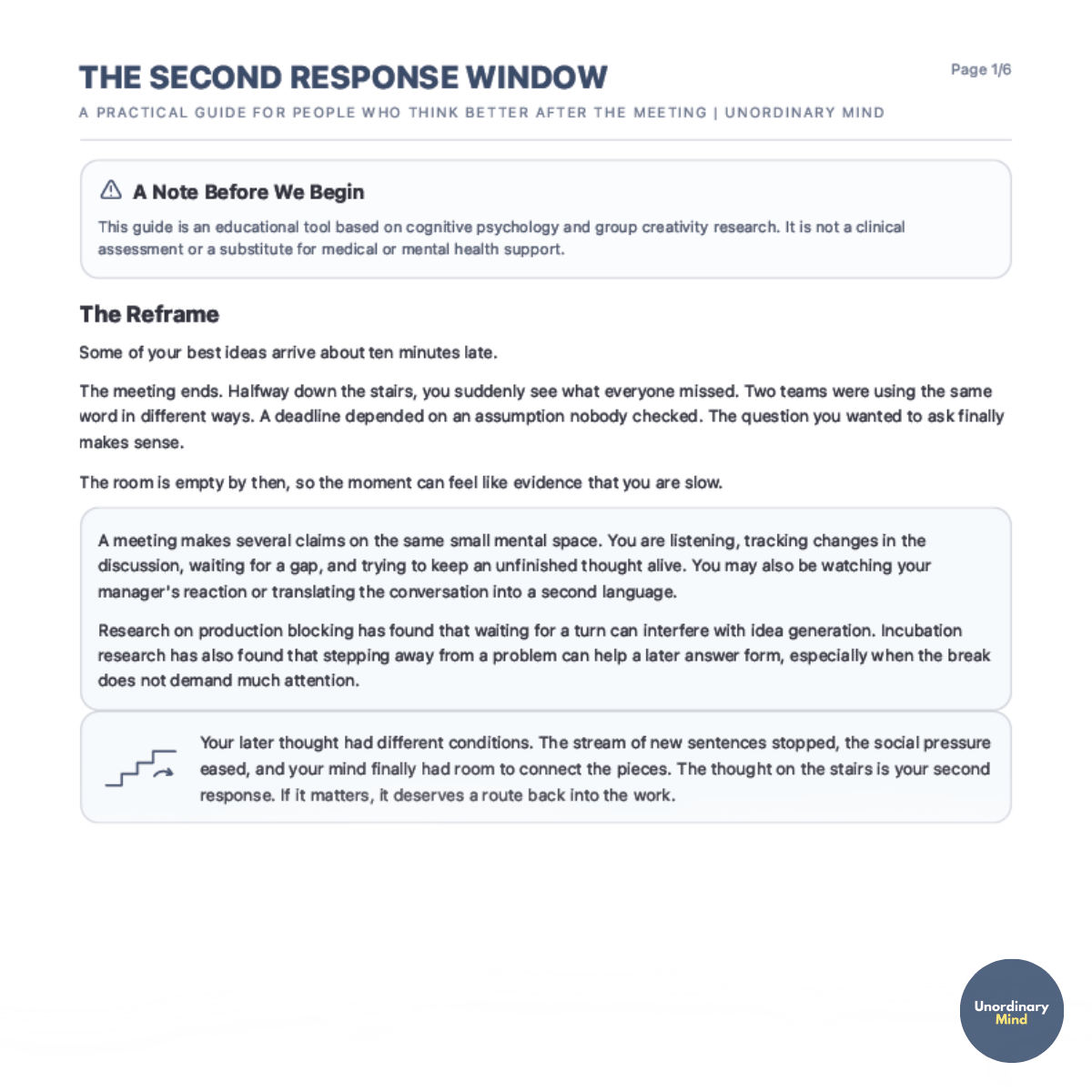
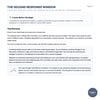
The Reframe. Understand why meetings can crowd working memory, why waiting for a turn can interrupt idea formation, and why a later thought may emerge once the pressure and incoming conversation stop.
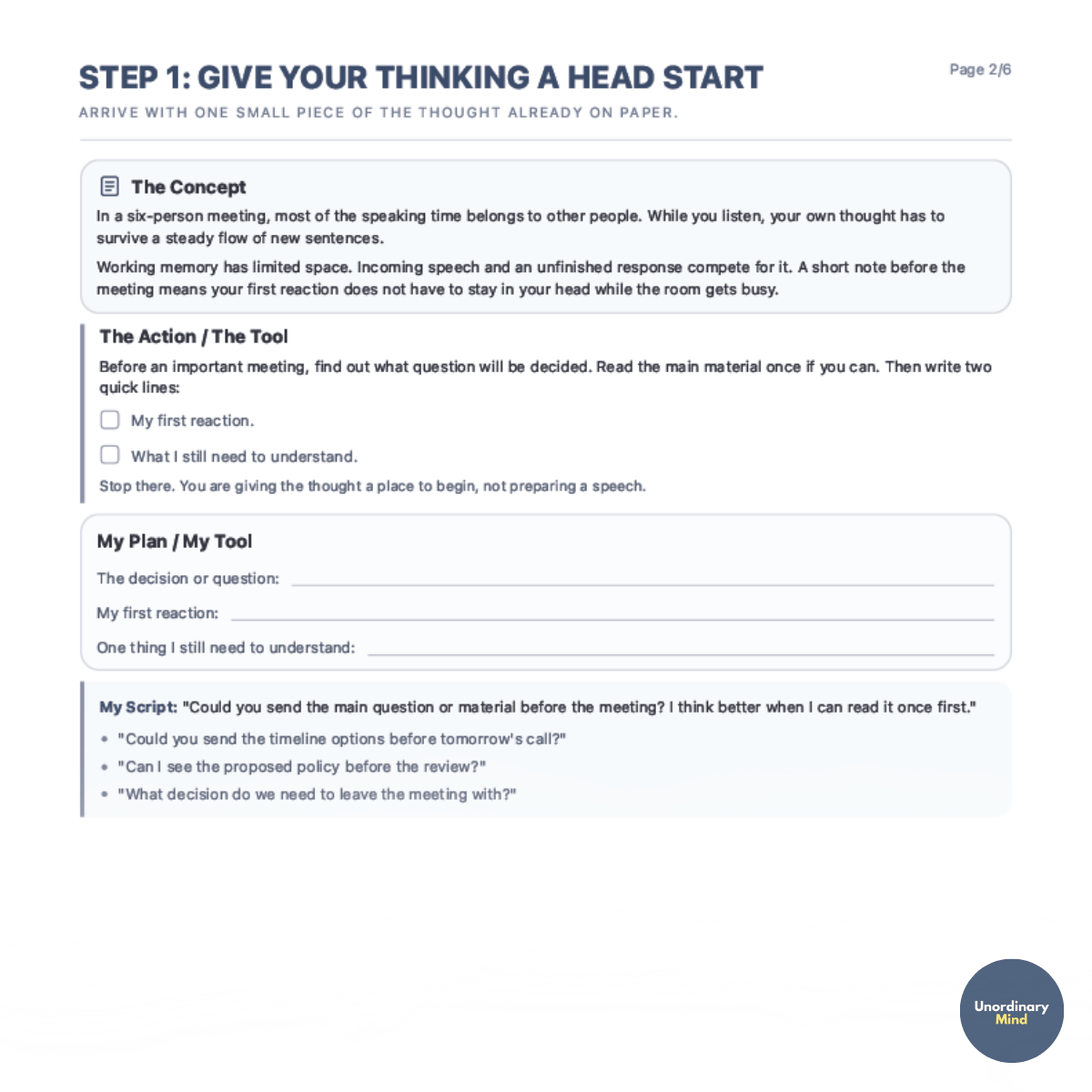
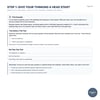
Step 1: Give Your Thinking a Head Start. Use a simple two-line note before an important meeting so your first reaction has somewhere to begin.
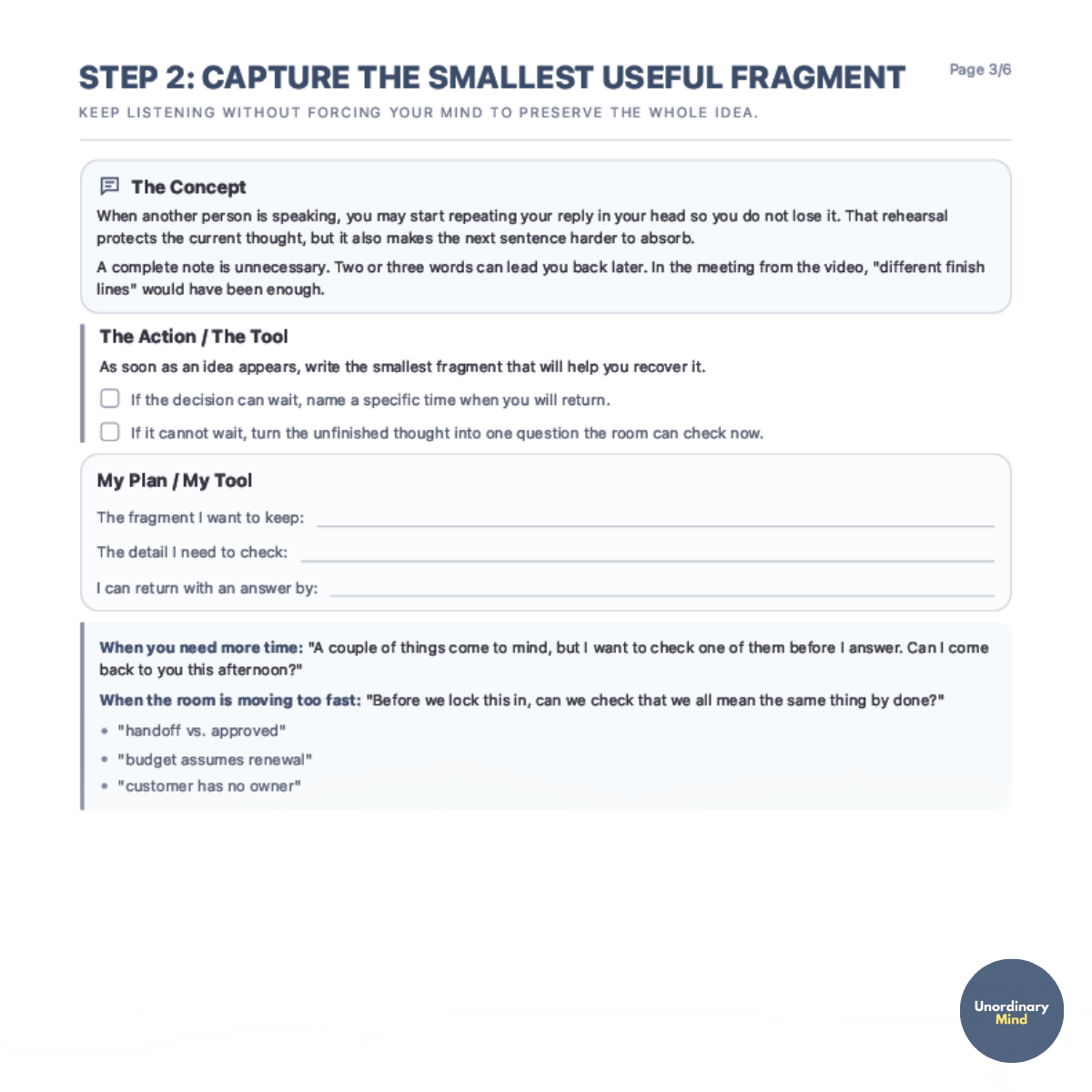
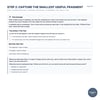
Step 2: Capture the Smallest Useful Fragment. Learn how to save an unfinished idea in two or three words without losing track of the conversation.
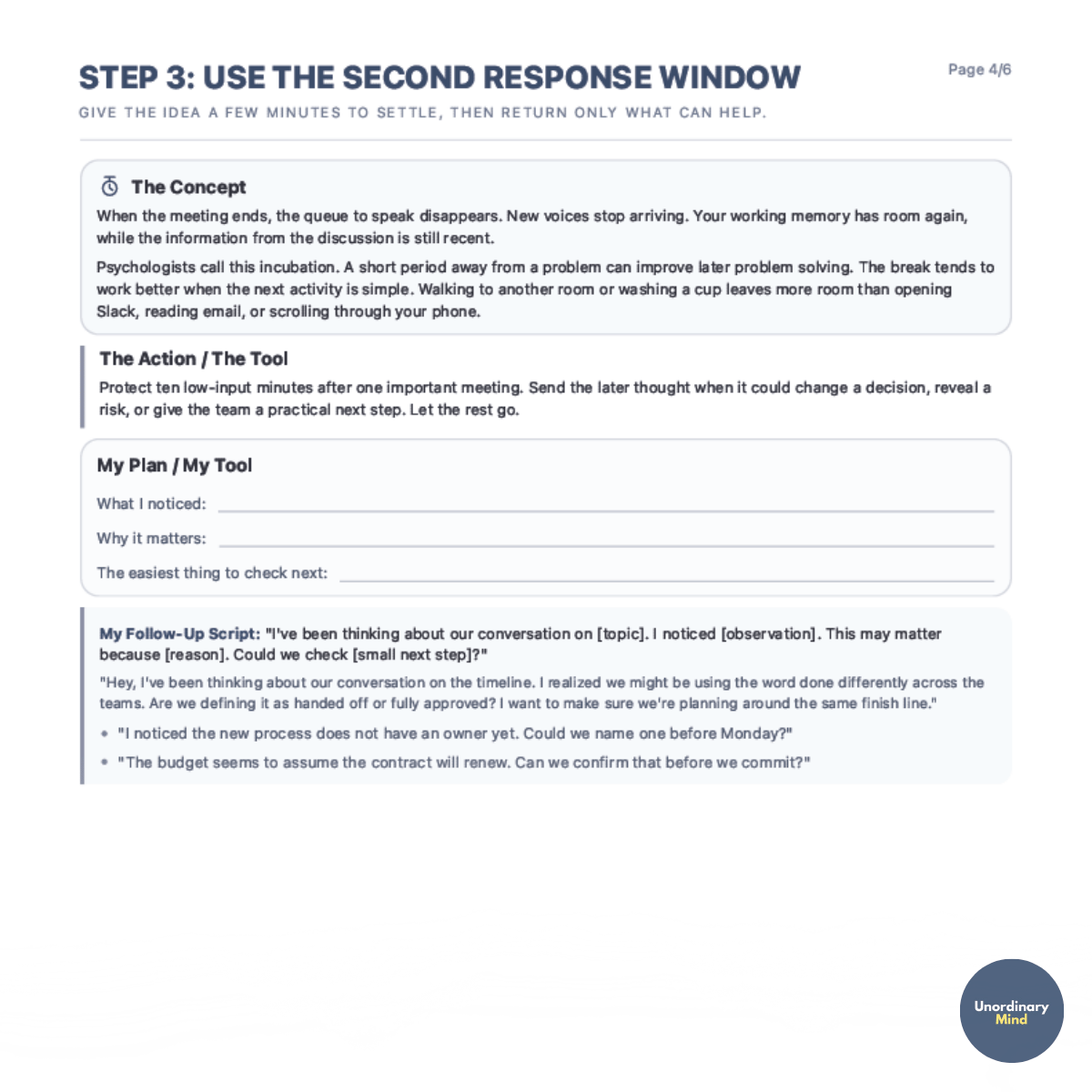
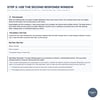
Step 3: Use the Second Response Window. Protect ten low-input minutes after a meeting, filter what is worth sharing, and use a ready-made follow-up script to bring the idea back.
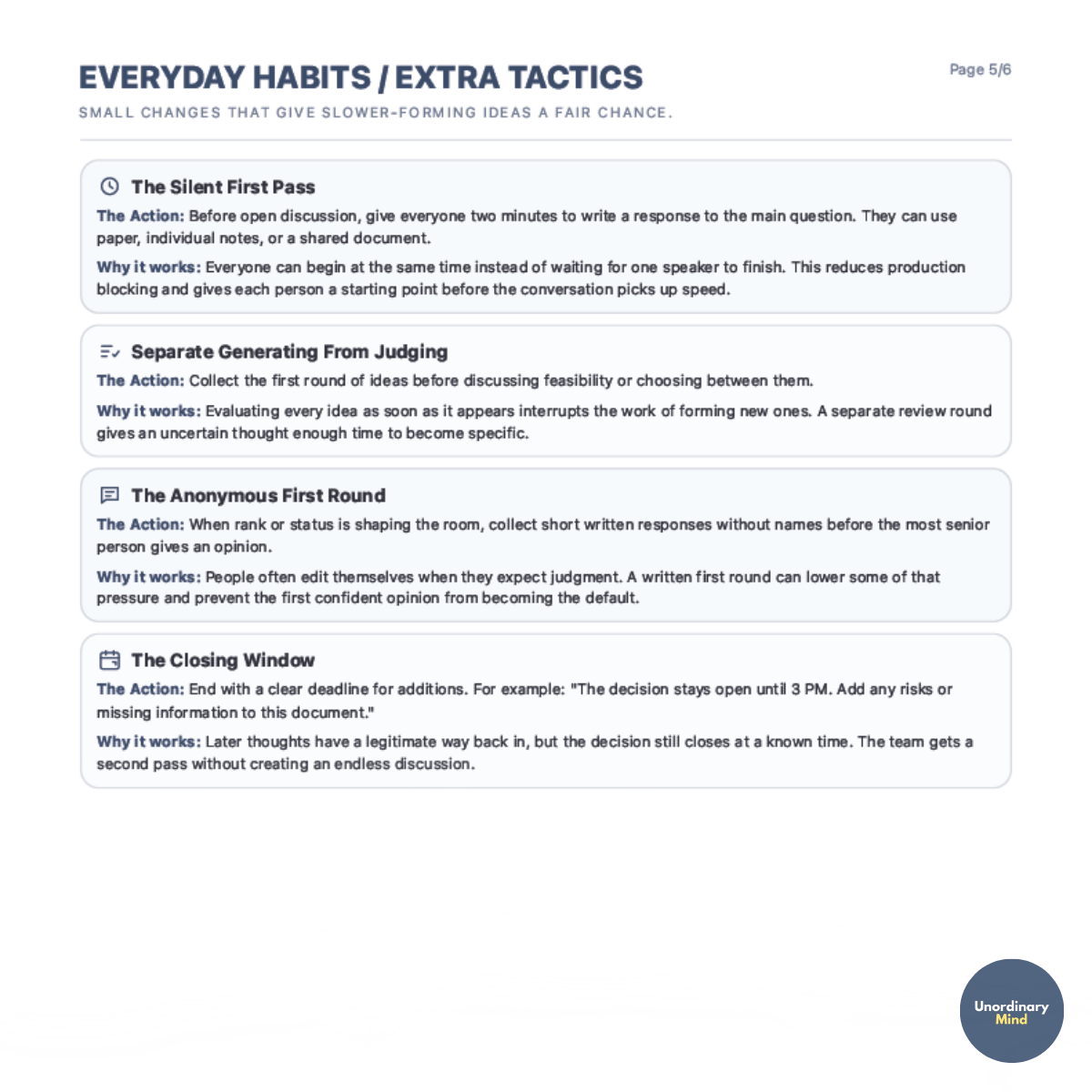
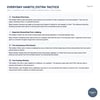
Everyday Meeting Tactics. Four practical ways to make group discussions more thoughtful, including a silent first pass, separate idea and review rounds, anonymous input, and a clear closing window.
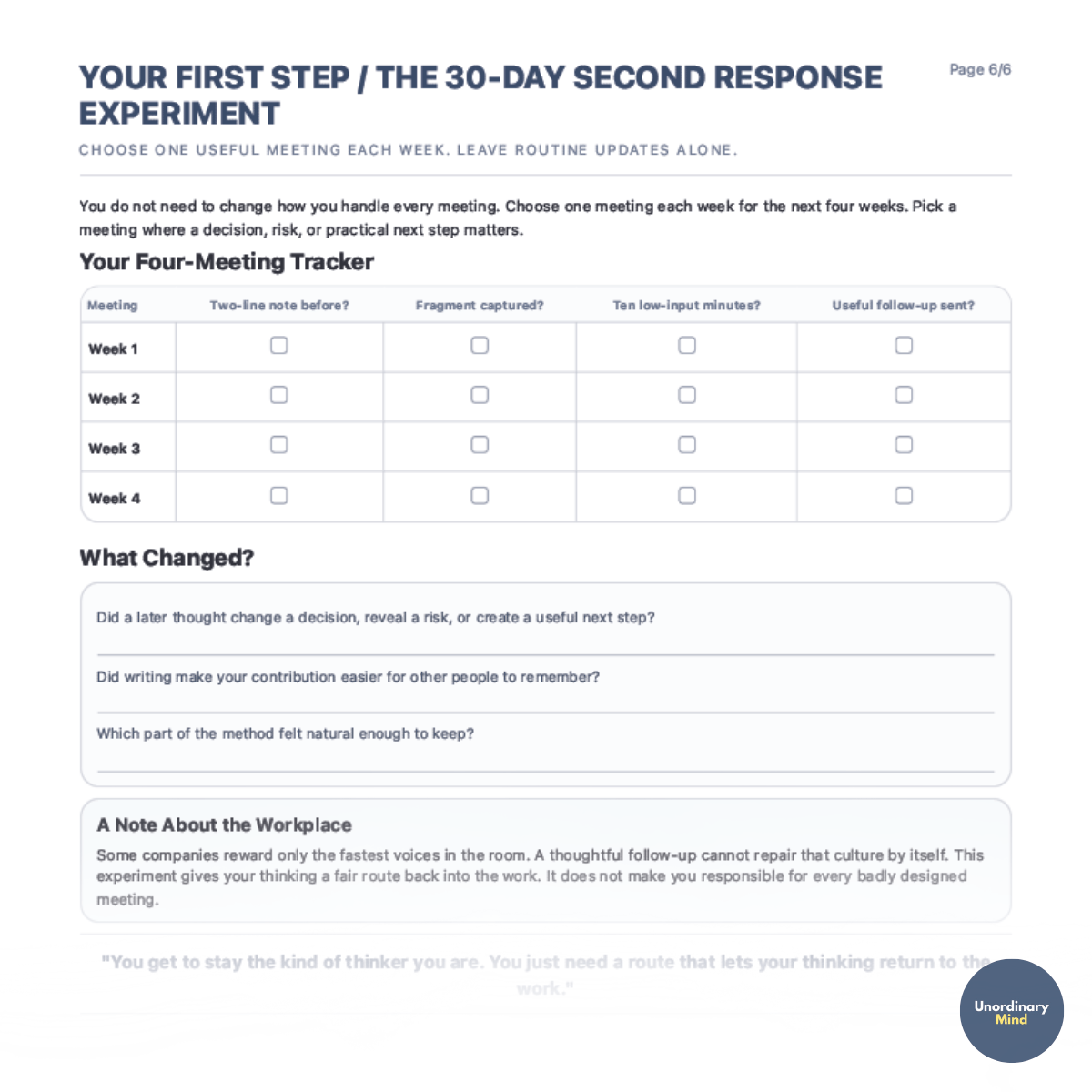
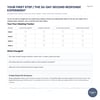
The 30-Day Experiment. A gentle four-meeting tracker to help you test the method without changing your entire workday.
Included Formats (Ink-Friendly):
A4 PDF
US Letter PDF
Price: Free (enter $0)
(Or, pay what you want to support the channel)
⚠️ Disclaimer: This guide is an educational tool based on cognitive psychology and group creativity research. It is not a clinical assessment or a substitute for medical or mental health support.